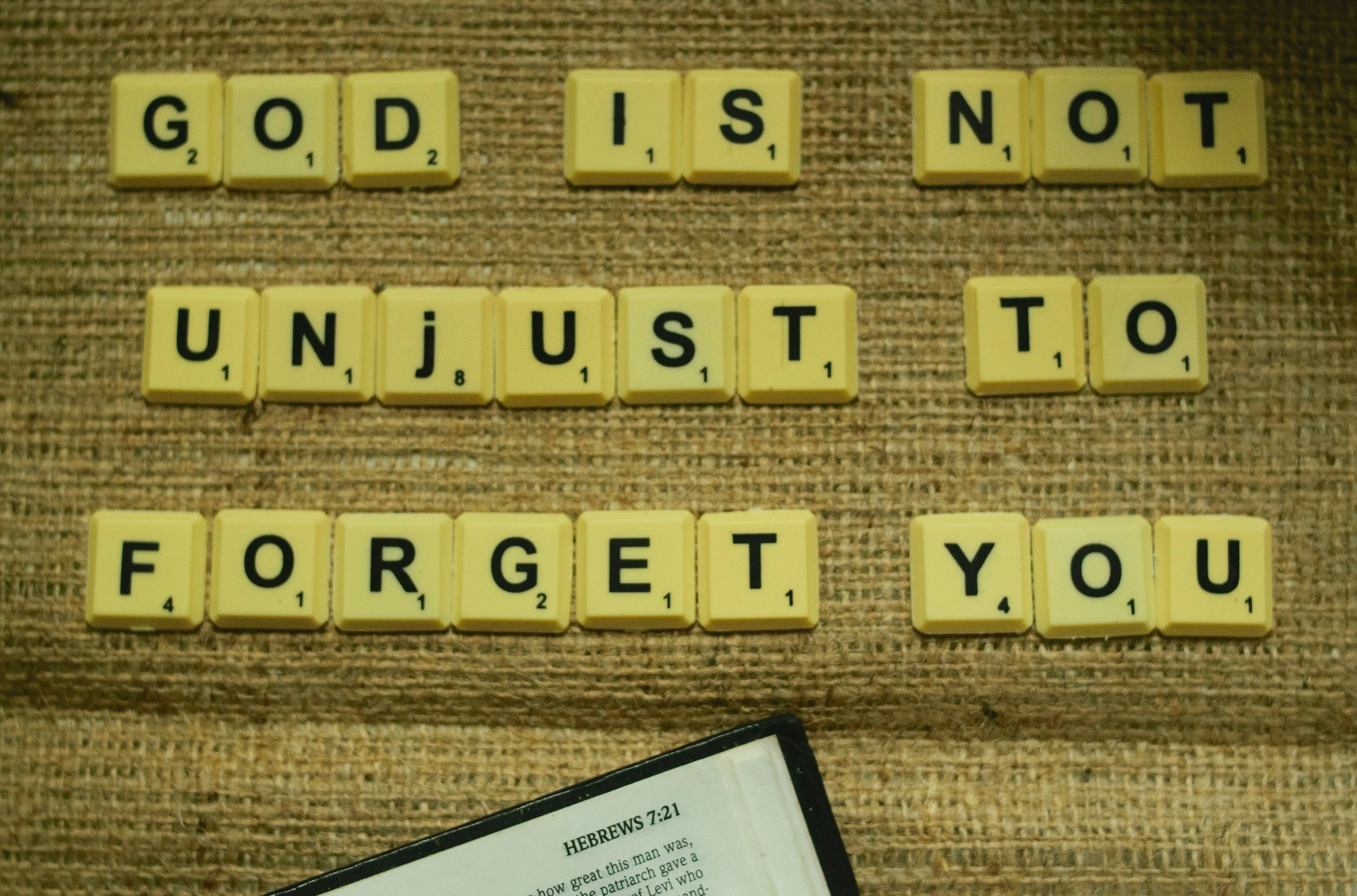
God's Faithfulness And Man's Unbelief (Sunday, April 19th, 2026)

Listen to this audio message: God's Faithfulness and Man's Unbelief
by Rijo John

It is a great joy to be in the house of the Lord with all of you today. I am so happy to see familiar faces and look forward to getting to know others during our time of fellowship. There is a beautiful sense of family in this sanctuary—the presence of children of God spending time together.

Today, we are meditating on two opposing forces we all face: God’s faithfulness and man’s unbelief.

The Danger of "Little Faith"

In Matthew 8, we find the disciples in a boat when a violent storm arises. Despite having just witnessed Jesus heal a leper, a centurion’s servant, and Peter’s mother-in-law, the disciples panicked. They woke Jesus, saying, "Lord, save us; we are perishing!".

Jesus’ response is sobering. He said to them, "Why are you afraid, you men of little faith?" (Matthew 8:26, NASB 1995). He then rebuked the winds and the sea, and it became perfectly calm. We often focus on the miracle, but as children of God, we should be disturbed that Jesus was unhappy with their lack of faith. After a whole day of seeing His power, their first response to trouble was to doubt His care.

Three Stops in the Wilderness of Unbelief

As we journey toward the "promised land" of our faith, we often hit stops where unbelief tries to take root. Deuteronomy 9:22 mentions three places where the Lord’s anger burned because of this struggle:

  • Massah: Testing God’s Presence. At Massah, the Israelites questioned, "Is the Lord among us, or not?". They had seen Egypt’s army destroyed, yet they still asked if God had abandoned them. It is like a 21-year-old child asking a parent if they are being abandoned at college after years of provision—it shows a broken relationship rather than just a lack of knowledge.

  • Taberah: Doubting God’s Provision in Suffering. Suffering is the quickest path to unbelief because we feel forsaken. When crises hit, we must ask: "What does this reveal about God?". We must take time for meditation to ask how faithful God has been in the past so that our faith is stirred for the next hardship.

  • Kibroth-hattaavah: Doubting the Fatherhood of God. Here, the people yielded to their cravings for meat, forgetting that God had provided for them before. When we give in to anxiety, we act like orphans rather than children who have a Father in heaven who knows our needs.

The True Nature of the Battle

In the days of Malachi, the people began to believe that God didn't love them or that He wasn't just. They rejected His very identity. Jesus came into that silence to prove that God does love you and cares for your smallest thoughts. He loves you so much that He died for you.

Jesus warned us to watch out for the "leaven" of the Pharisees—which is unbelief. He never told us to run from sinners, because sin has a solution: bring them to Jesus for healing. But unbelief is fatal. It has the power to tell someone there is no hope or that they have messed up too badly for God to care.

A Call to Remembrance and Fellowship

This is why we gather as a church. Satan attacks the wandering sheep when they are alone, whispering that God has abandoned them. We need one another to speak words of faith and to lift each other up. We must be vulnerable and share our doubts with our brothers and sisters.

Jesus asks each of us today: "Who do you say I am?". Am I the one who will watch you drown, or am I the faithful Father who will never leave you?. Whatever season you are in, stay strong and keep going back to His promises. As James 5:8 says, "You too be patient; strengthen your hearts, for the coming of the Lord is near" (NASB 1995).

He is not just coming back; He is near to you right now, sitting next to you and interested in everything you are going through. May the Lord bless you all.


May God Keep Your Soul, Spirit, and Body Blameless (Sunday, April 12th, 2026)

Listen to this audio message: May God Keep Your Soul, Spirit, and Body Blameless
by Pastor Sam Peter

Beloved, I am so grateful to share what the Lord has placed on my heart this Lord’s Day. We often focus on what we can see, but God’s concern for us is much deeper. My prayer for you today is the same as the apostle Paul’s: "Now may the God of peace Himself sanctify you entirely; and may your spirit and soul and body be preserved complete, without blame at the coming of our Lord Jesus Christ" (1 Thessalonians 5:23, NASB 1995). We must remember that "Faithful is He who calls you, and He also will bring it to pass" (1 Thessalonians 5:24, NASB 1995).

We are complex beings. While we can only physically see the body, God created us as a trinity of spirit, soul, and body. As we were reminded earlier, "the Lord God formed man of dust from the ground, and breathed into his nostrils the breath of life; and man became a living being" (Genesis 2:7, NASB 1995). Our bodies are from the dust and will return to it, but the breath God gave us—our soul—is eternal. When we pass from this world, our body returns to the earth, but our soul reaches the Creator, leaving behind the memory of how we lived and helped others.

The Value of the Soul and the Urgency of the Gospel

In the Garden of Eden, God gave Adam and Eve the freedom to choose, yet they chose to disobey, breaking our relationship with Him. Praise God that through the ultimate sacrifice of Jesus Christ on the cross, that relationship has been restored.

Because of this, we must understand the immense value of a single soul. The world may look at wealth or status, but Jesus asked: "For what will it profit a man if he gains the whole world and forfeits his soul? Or what will a man give in exchange for his soul?" (Matthew 16:26, NASB 1995).

Whether someone is rich or poor, or from a different country, every soul is the same and its price is more than all the wealth of people like Elon Musk. This should give us a great urgency to share the Gospel. We have a privilege that even angels do not: the opportunity to tell someone that Jesus died for them. You don't always need to be a fluent speaker; you can invite people, offer to pray for a sick coworker or their family, or simply let them see the change in your life when you choose not to use foul language or lose your temper under pressure. Every Monday morning when people ask about your weekend, that is an opportunity to share that you went to worship the Lord.

Aligning the Spirit and Transforming the Mind

To live a whole life, our spirit must align with God. As Scripture says, "God is spirit, and those who worship Him must worship in spirit and truth" (John 4:24, NASB 1995). True prosperity flows from this living connection.

However, we must also deal with our minds. Our thoughts go everywhere—to our jobs, our schoolwork, or what we are cooking for lunch. We are told: "And do not be conformed to this world, but be transformed by the renewing of your mind, so that you may prove what the will of God is, that which is good and acceptable and perfect" (Romans 12:2, NASB 1995).

I want to give you a "prescription" that is good for everyone, whether you are on medication or not. "A joyful heart is good medicine, but a broken spirit dries up the bones" (Proverbs 17:22, NASB 1995). We must choose to "Rejoice in the Lord always; again I will say, rejoice!" (Philippians 4:4, NASB 1995). When your soul prospers through the Word of God, fellowship, and the Holy Spirit, your thinking aligns with truth and your decisions become wise.

Honoring God with the Body

Finally, God cares deeply about your physical body. Scripture asks, "Or do you not know that your body is a temple of the Holy Spirit who is in you, whom you have from God, and that you are not your own?" (1 Corinthians 6:19, NASB 1995).

We must make every effort to keep this "temple" healthy through exercise and diet so we can glorify Him. I have managed diabetes for 27 years, so I understand there are things we cannot control, but we must do our part. Sometimes, God allows us to go through physical trials so that we can comfort others. When my wife, Molly, went through cancer, or when we lost loved ones to accidents and heart failure, God taught us how to sympathize with those who are suffering and show them that God is the healer.

A New Perspective on Prayer

Think of Fanny Crosby, the famous hymn writer who was blind for almost her entire life. She wrote thousands of hymns like "Blessed Assurance". While her body was not healed in the way we might think, God blessed her soul and spirit so significantly that she became a blessing to the whole world. Sometimes divine blessing is not the way we are thinking because our dimension is limited, but God can use us even in our weakness.

My challenge to you today is to change the way you pray for yourselves and others. Instead of only praying for physical healing, pray according to 3 John 1:2: "Beloved, I pray that in all respects you may prosper and be in good health, just as your soul prospers" (NASB 1995). Let us seek to be preserved blameless—spirit, soul, and body—until the day the Lord returns.

God Is With Us During Times Of Trouble (Sunday, April 5, 2026)

Listen to this audio message: God Is With Us During Times Of Trouble
by Robin John

Yesterday, we talked about how intimately God is aware of our day-to-day lives—the good, the ugly, and the bad. He sees us and He knows us. Today, I want to share a message that has blessed me, centered on a story we all know well.

Before we begin, I want to mention Pastor Manoj. He called this morning, distressed and brokenhearted by unpredictable events in his home. Instead of sharing the message today, he is with his daughter in the hospital. That is the reality of life; it doesn't wait for us to plan or prepare backups. You just have to go with the punches, but what matters is what is happening inside of us.

Think of the show Friends. There is an episode where Monica—who is the neatest, most organized person you can imagine—has a secret closet. No one was allowed inside, and she pretended it didn't exist. But when it was finally opened, all the piled-up junk and unorganized mess came tumbling down.

We are often like that. On the outside, we try to look perfect and hold ourselves to a high standard. But the reality is that all of us have a "closet" inside—a place that is messy, raw, and unorganized—that we try to hide from people and even from God. If you feel like you are falling apart while trying to manage your internal turmoil, this message is for you.

The Flaw of Prolonged Disobedience

Let's look at the life of Jonah.

"Now the word of the Lord came to Jonah the son of Amittai, saying, 'Arise, go to Nineveh, the great city, and cry out against it, for their wickedness has come up before Me.' But Jonah up to flee to Tarshish from the presence of the Lord. So he went down to Joppa, found a ship which was going to Tarshish, paid the fare and went down into it to go with them to Tarshish from the presence of the Lord. The Lord hurled a great wind on the sea and there was a great storm on the sea so that the ship was about to break up." (Jonah 1:1-4, NASB 1995)

The first thing we see in Jonah is prolonged disobedience. God gave him a clear word to preach to Nineveh. Instead, Jonah went in the complete opposite direction, finding a ship headed for the furthest known place on earth.

I wonder, how angry do you have to be to hold onto that feeling for so long? Usually, by the time we reached the port or saw the boat, we would have calmed down or repented. But Jonah held onto this for months. On the outside, he was a prophet; he looked great. On the inside, he had a massive, unmanaged anger issue that made him want to run away from his calling and even from life itself.

Extreme Moods and Unpredictable Reactions

As the storm raged, the sailors tried everything to keep the ship afloat. They eventually cast lots to find the source of the calamity, and the lot fell on Jonah. When they asked him what they should do, Jonah’s solution was extreme: "Pick me up and throw me into the sea".

This is the second thing we notice: extreme mood slips. Jonah didn't want to assess the situation or find a gradual solution; he just wanted to die to avoid facing the scenario. Interestingly, even in Jonah's disobedience and failure, God used the moment to reach the sailors, who began to worship the Lord after the sea grew calm.

After being swallowed by a fish and repenting in isolation, Jonah finally goes to Nineveh. He preaches a simple message of judgment, and the entire city—from the king to the animals—repents in sackcloth and ashes. This was an evangelist’s dream! But look at Jonah’s reaction:

"But it greatly displeased Jonah and he became angry. He prayed to the Lord and said, 'Please Lord, was not this what I said while I was still in my own country? Therefore in order to forestall this I fled to Tarshish, for I knew that You are a gracious and compassionate God, slow to anger and abundant in lovingkindness, and one who relents concerning calamity. Therefore now, O Lord, please take my life from me, for death is better to me than life.'" (Jonah 4:1-3, NASB 1995)

This is unpredictable anger. A moment that should have been a celebration of God's mercy became a moment where Jonah wanted to die because God was too gracious. Like Jonah, we often have triggers that set us off in ways people can't predict.

The God Who Walks With Us

Finally, we see Jonah's unpredictable moods. One moment he is "extremely happy" because God provided a leafy plant for shade. The next moment, when the plant withers, he is so angry he wishes he were dead. He was a man who was raw, authentic, and a bit of a mess—just like us.

We often think God only uses perfect people who have everything together. But in this entire story, do you know how many times God told Jonah, "I can't deal with you anymore"? Not once.

God was with Jonah when he disobeyed, when he was in the port, when he was on the boat, and when he was in the sea. God was present in every moment of his pain, distress, and anger.

A Resurrection Hope

Today, we celebrate the risen God. We don't talk about a God who stayed dead, but a God who lives and walks with us through our own messes and messy closets. He is not surprised by our weaknesses or our inability to control our flesh.

The Bible says every day of our life was written before any of them came to be. I believe God reads a few chapters ahead of us. He turns the pages before we get there to ensure there is enough grace, provision, and mercy accounted for tomorrow.

You don't have to be ashamed or afraid of what He thinks of you. He already approves of you. Just as He never grew tired of Jonah, He will never tell you that He is tired of you. He sees the authentic you, and He is walking with you through it all.