Main passages: Acts 2:42; Acts 20:28; Ephesians 4:11–12; Romans 12:1; Romans 6:4
The Church Is People, Not a Building
What comes to mind when I say "church"? Most of us think of a building. But I want us to see: the building is not the church — the people in the building are. When we step out, the church goes outside with us; the empty hall is just a hall. The Greek word is ecclesia — ek, "out of," and kaleo, "to call": the called-out people, an assembly. One person alone does not become the church; when we come together, the church is there.
Jesus used the word only twice in the Gospels — Matthew 16, speaking to Peter, and Matthew 18, on restoring a brother. And the church was officially birthed at Pentecost, when the Holy Spirit came like a rushing wind, we spoke in languages Jerusalem's visitors could understand, and Peter stood up and preached, quoting Joel.
One Universal Church — and Local Churches
When I say "church," I mean two things. There is the universal church: the one body of Christ across all time and place, from the upper room to everyone seated here today, with Christ as our head — "he is the head of the body, the church" (Colossians 1:18). And there are local churches: you and I gathering to glorify God, build up one another, study the Word, worship, and pray.
And this body was purchased for us: elders are to "care for the church of God, which he obtained with his own blood" (Acts 20:28). Yet not everyone called "Christian" belongs to it — only those truly bought by the blood of Jesus, as the remnant was in Israel.
An Invisible Step, and a Visible Step
I become part of the universal church in two steps. The first is invisible: the new birth, when I am born and adopted into God's family. Some of us can name the day — I stood up at an altar call on August 15, 1991. For others it happened gradually, and only God knows the moment.
The second step is visible: baptism, the public side of that inward change. "For in one Spirit we were all baptized into one body—Jews or Greeks, slaves or free" (1 Corinthians 12:13). I am a child of God before baptism — but in baptism the local church witnesses my public declaration of faith.
A Family That Meets Needs — Wherever It Gathers
What do we do as a local church? We worship Christ, we receive instruction from Scripture — and we meet one another's needs, a core purpose I find largely forgotten today: someone sick, someone without food, someone in a job crisis — in a family, every need is our own. For its first centuries the church met in houses, where we knew one another and needs could be seen and met. That is why even megachurches must organize small groups, and why Victor Choudhrie's Greet the Ecclesia so transformed my understanding. Small gatherings are the body's fundamental unit.
And our pattern is the same as at the beginning: "And they devoted themselves to the apostles' teaching and the fellowship, to the breaking of bread and the prayers" (Acts 2:42) — the apostles' teaching reaching us now through their writings. Wherever we do these things — a house, under a tree, a Tuesday-morning meeting — the Lord sees His church.
Five Fingers, One Purpose: Equipping the Saints
How are we organized? The ascended Christ gave gifts to us: "And he gave the apostles, the prophets, the evangelists, the shepherds and teachers, to equip the saints for the work of ministry, for building up the body of Christ" (Ephesians 4:11–12). Think of your hand with me. The thumb, the apostle — the sent-out one who, like the thumb, touches every other finger. The index finger, the prophet, who points and speaks God's word to individuals — most often words of encouragement, edification, and comfort. The middle finger, the longest, the far-reaching evangelist. The ring finger, the pastor, wedded to the church. The little finger, the teacher.
But the gifts are not given so a few of us minister while everyone else receives — they are given to equip the saints. Ministry — in a jail, on a campus, in a neighborhood, at a workplace — is every believer's calling.
Elders, Deacons, and a Participating Body
For leadership, I find Scripture uses two words interchangeably: episkopos (overseer — behind "bishop" and Episcopal) and presbuteros (elder — behind Presbyterian). The pastoral epistles give their qualifications, and the biblical pattern is a plurality of elders shepherding, teaching, and exercising oversight — not the family's most important people, simply those with that responsibility. Deacons (diakonos, servants) meet practical needs, and every member exercises spiritual gifts to supply what others lack. The body is a participative body — not a stage where some perform while the rest of us watch.
Fellowship That Makes Us One
The goal of our fellowship is unity — the same mind, the mind of Christ. In fellowship we share our lives, bear one another's burdens, and "confess your sins to one another and pray for one another, that you may be healed" (James 5:16).
Worship Is a Life Presented, Not Just Songs Sung
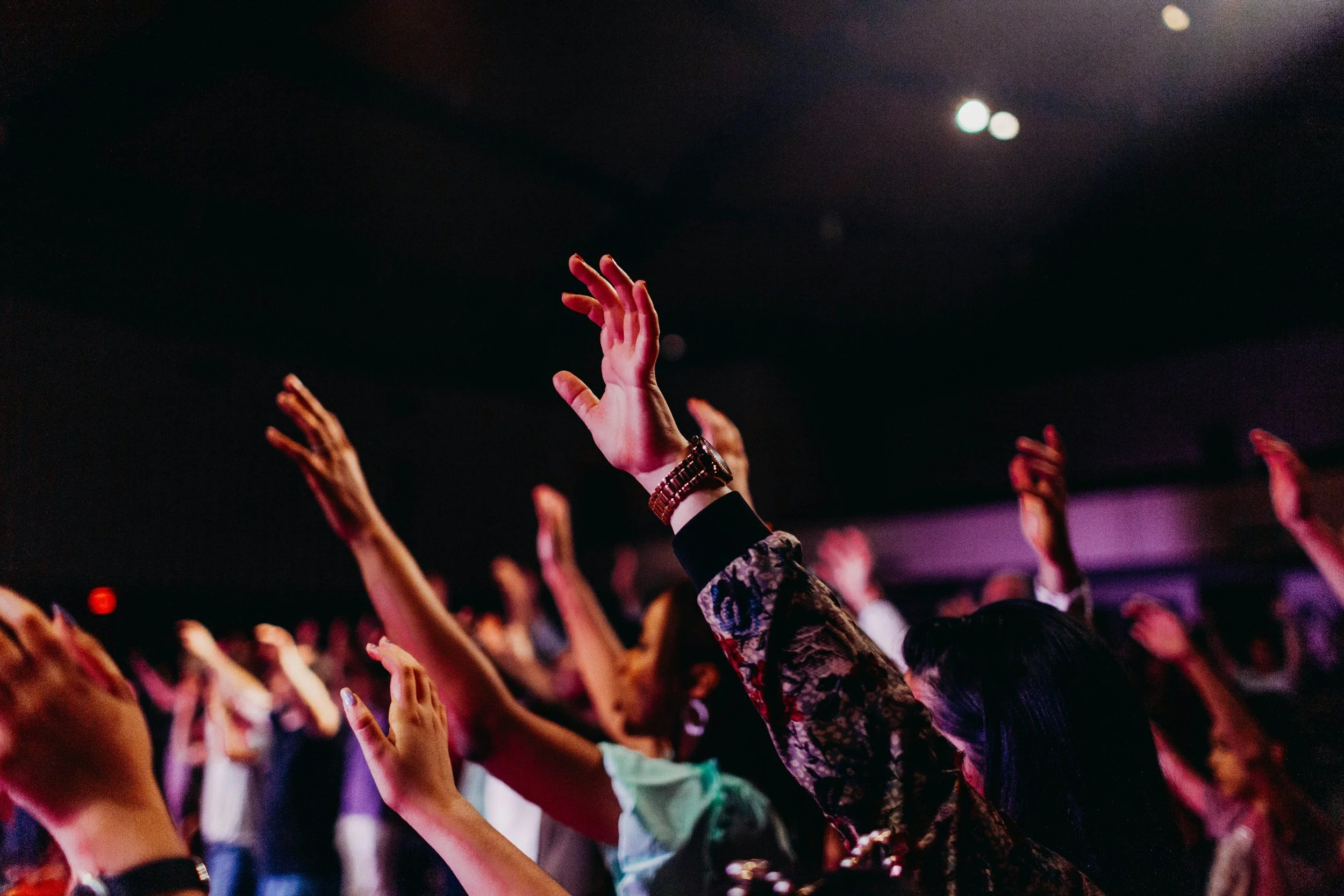
Worship, for me, is not the singing time; it runs all through my life. Paul's great worship text is about bodies, not music: "present your bodies as a living sacrifice, holy and acceptable to God, which is your spiritual worship" (Romans 12:1). It is marked by surrendered posture, by worship in spirit and truth, and, above all, it always centers on Christ's redemptive work. I can sing for the music and have no worship in it, just as I can pray eloquently with no prayer in my heart.
Two Ordinances, One Foundation: His Death
Finally, I want us to turn to the two ordinances given to us — symbolic actions, meaningless if done without true meaning. Baptism comes once: my identification with Christ's death, burial, and resurrection. "We were buried therefore with him by baptism into death, in order that, just as Christ was raised from the dead by the glory of the Father, we too might walk in newness of life" (Romans 6:4). It is an outward testimony of an inward change, a step of obedience following faith, practiced from Pentecost onward.
Communion we take often: remembrance — His body broken for us, His blood shed for us — and proclamation: "you proclaim the Lord's death until he comes" (1 Corinthians 11:26), looking back to the cross and forward to His return. Notice: both ordinances are about the death of Jesus Christ. That is no accident — His substitutionary death is the reason you and I are here, the foundation of our life, and we cannot talk about it enough. So let us take part not lightly, but prayerfully and reverently.
May God Bless Each One of You
I know this study was different from a typical Sunday morning message — deliberately so. I want us to understand what the church is, what the local church is expected to do, and what worship and the ordinances truly mean — so that we strengthen and build up one another, every member equipped for ministry. May God bless each one of you.
From the foundational study series.
Scripture quotations are from the ESV® Bible (The Holy Bible, English Standard Version®), © 2001 by Crossway, a publishing ministry of Good News Publishers. Used by permission. All rights reserved.