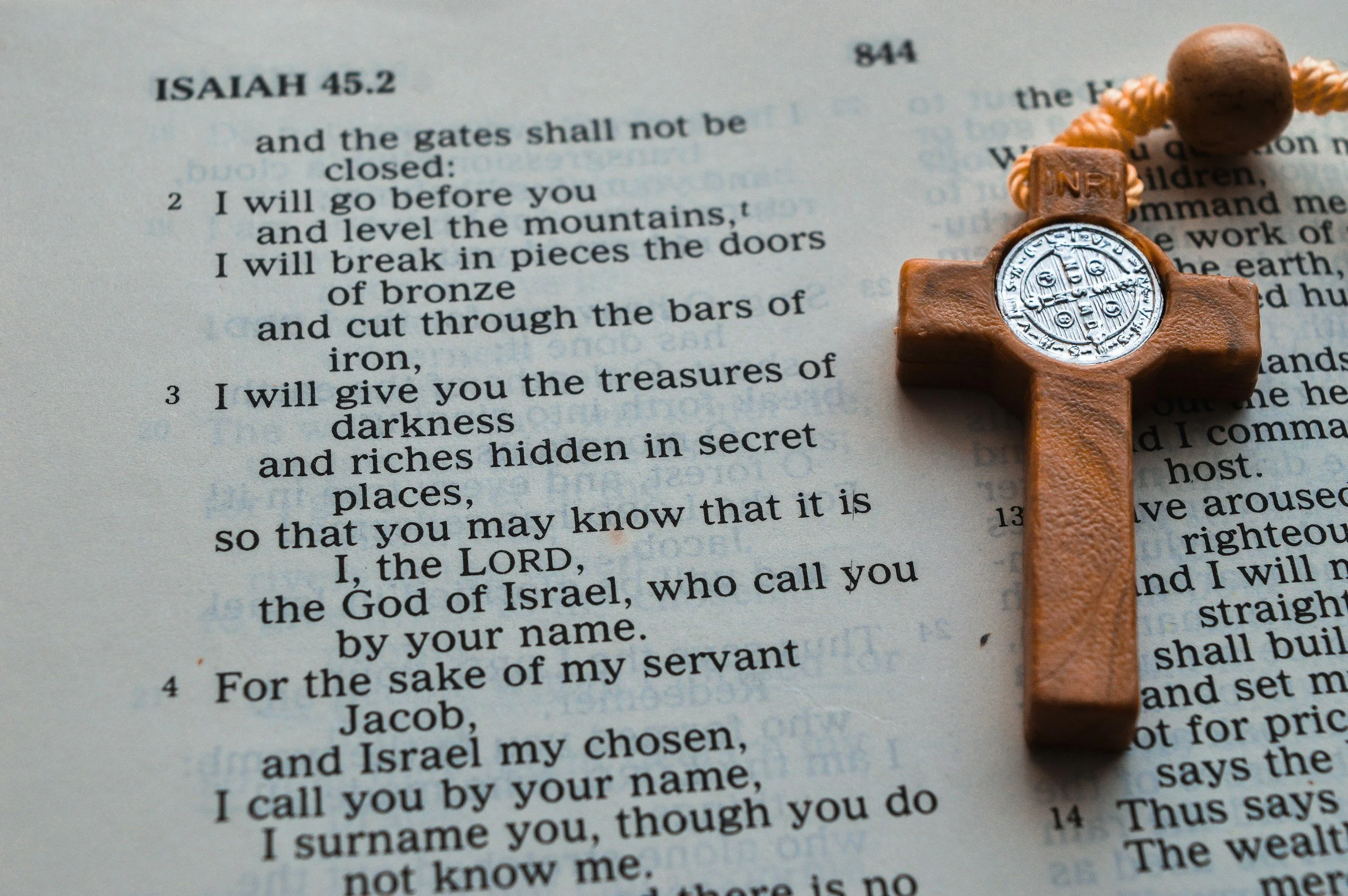
Dear church family, when we contemplate God in heaven, our hearts naturally bow in awe of His inherent perfection. Absolute perfection is fundamental to His very nature—there is no lack, flaw, or imperfection in Him. Human language falls far short when we attempt to capture the vastness of His holiness and glory. Yet, as we open the Book of Hebrews for our meditation, we are introduced to a profound and marvelous truth regarding Jesus, our High Priest: He was made perfect.
This statement does not imply that Jesus was morally flawed or imperfect prior to His earthly walk. Rather, it signifies that He was made complete. When Jesus was tested on earth, it was never a matter of uncertain trial—God the Father knew with absolute certainty that Christ would pass every single test. The testing took place to demonstrate, prove, and establish before all creation that He was the perfectly obedient Son. As we gather around the Lord’s Table, it is only appropriate that our focus shifts away from temporary earthly preoccupations and fixes squarely upon the cross.
1. The True Cost of Grace and the Captain of Our Salvation
In our daily prayer lives, it is far too easy to become earthly-minded, coming to the Lord primarily for temporal blessings, comfort, and physical provision. While God indeed grants us many natural gifts, our ultimate praise must rest on the most precious gift He has already bestowed—the salvation of our eternal souls. Let us consider how the writer of Hebrews describes Jesus in chapter 2:
“But we do see Him who was made for a little while lower than the angels, namely, Jesus, because of the suffering of death crowned with glory and honor, so that by the grace of God He might taste death for everyone. For it was fitting for Him, for whom are all things, and through whom are all things, in bringing many sons to glory, to perfect the author of their salvation through sufferings.” — Hebrews 2:9–10 (NASB 1995)
We often praise God for His grace in bestowing natural comforts and eternal life. But consider what that grace required of Jesus! Grace has sometimes been expanded through the acronym G-R-A-C-E: Great Reward At Christ’s Expense. We are the recipients of that great reward, but it did not come cheap or free—it came when Jesus Christ tasted death for each one of us.
Furthermore, Scripture reminds us that this world does not exist for our personal pleasure; we and all created things exist for His pleasure. The moment we center our lives on personal comfort and worldly success, we misplace the devotion due to God alone. Jesus’ calling was to suffer death for all, and through that suffering, He was perfected as the Captain of our salvation. For us as believers, this reveals that suffering has an essential, purposeful place in our Christian walk. The key essence of this suffering is ridding ourselves of ourselves, allowing us to decrease so that Christ may increase in our lives.
2. Learning Obedience Step-by-Step in Daily Life
How did Jesus experience this process of being made complete? The writer of Hebrews expands on this mystery in chapter 5:
“Although He was a Son, He learned obedience from the things which He suffered. And having been made perfect, He became to all those who obey Him the source of eternal salvation, being designated by God as a high priest according to the order of Melchizedek.” — Hebrews 5:8–10 (NASB 1995)
Although Jesus is fully equal with God, in His earthly role as the Son, He emptied Himself and learned obedience through experiential suffering. It was not a single isolated event at Calvary, but a continuous daily choice throughout His life. In the face of exhaustion, physical hunger, bitter rejection, and deep misunderstanding from the very people He created, Jesus submitted His will to the Father, choosing step-by-step to say, “Nevertheless, not My will, but Yours be done”.
Understanding Our Personal Trials and Heartbreaks
When you and I face confusing circumstances, physical pain, loss of hope, or unprovoked rejection, we often ask, “Lord, why am I going through this pain?” But if the Son of God learned obedience through what He suffered, how much more must we, His called people, expect to share in His sufferings so that we may decrease and Christ may increase in us!
3. The Oath of an Unchangeable, Eternal High Priest
To understand the magnitude of Christ's work, we must contrast His priesthood with that of the Old Testament Aaronic order. Under the Law, high priests were frail and mortal. They had to offer sacrifices repeatedly—first for their own personal sins, and then for the sins of the people—only to eventually die and be replaced by another. It was an endless, revolving door with no permanent entry.
God established a superior, unchangeable priesthood based on two immutable things: His promise to Abraham and His oath recorded prophetically by King David in Psalm 110:4:
“And inasmuch as it was not without an oath... through One who said to Him, ‘The Lord has sworn and will not change His mind, "You are a priest forever"’; so much the more also Jesus has become the guarantee of a better covenant... For it was fitting for us to have such a high priest, holy, innocent, undefiled, separated from sinners and exalted above the heavens; who does not need daily, like those high priests, to offer up sacrifices, first for His own sins and then for the sins of the people, because this He did once for all when He offered up Himself.” — Hebrews 7:20–22, 26–27 (NASB 1995)
Jesus did not need to offer a sacrifice for Himself, nor does He repeat His offering. He entered the Holy of Holies once for all, offered Himself as the perfect sacrifice, and sat down at the right hand of God because the work was completely finished! He is our eternal High Priest according to the order of Melchizedek—King of Righteousness (Zedek) and King of Peace (Salem).
4. Practical Application: Counting It All Joy and Denying Ourselves
What does this mean for our practical daily lives today? The first-century Christians to whom James wrote experienced severe physical persecution—imprisonment, martyrdom, and physical suffering. Yet James gives them an astounding command:
“Consider it all joy, my brethren, when you encounter various trials, knowing that the testing of your faith produces endurance. And let endurance have its perfect result, so that you may be perfect and complete, lacking in nothing.” — James 1:2–4 (NASB 1995)
Just as an athlete or soldier cannot build stamina in a luxury hotel room eating choice foods and relaxing, a Christian cannot develop spiritual endurance without tested faith. While we may not face physical martyrdom today, our primary form of "suffering" is the daily work of denying ourselves—ridding ourselves of self-centered desires and natural tendencies.
This self-denial manifests in very concrete, everyday choices:
Prioritizing Spiritual Fellowship: Choosing to gather in God's house and sit in His presence over personal entertainment, sports matches, or leisure activities.
Overcoming Natural Disposition: Stepping out of our natural tendencies (whether as an introvert or extrovert) to intentionally spend time in prayer or love and serve the body of Christ.
Initiating Reconciliation: Humbly going to a brother or sister to resolve misunderstandings and seek peace, even when we know in our conscience that we were not at fault.
Faithful Hidden Service: Performing thankless, uncomfortable tasks with joy simply because we love the Lord and wish to honor Him.
Conclusion: Complete in Christ and Being Made Complete Daily
When we choose the hard path of self-denial out of love for Christ, we are submitting to God's glorious refining process. Through Christ's finished work on the cross, God has already granted us a positional perfection—we are complete in Him! Yet, as we walk out our daily lives, God uses our trials and self-denial to produce endurance, transforming our character so that we become practically complete, lacking in nothing.
A Closing Prayer for the Church
Heavenly Father, we praise You for Jesus, our High Priest according to the order of Melchizedek, who offered Himself once for all to secure our eternal salvation. As we go forth this week, fix our eyes on the cross. Grant us grace to count every trial as joy, to deny ourselves daily, and to yield to Your refining work so that Christ may increase in our lives. In Jesus' holy name, Amen.