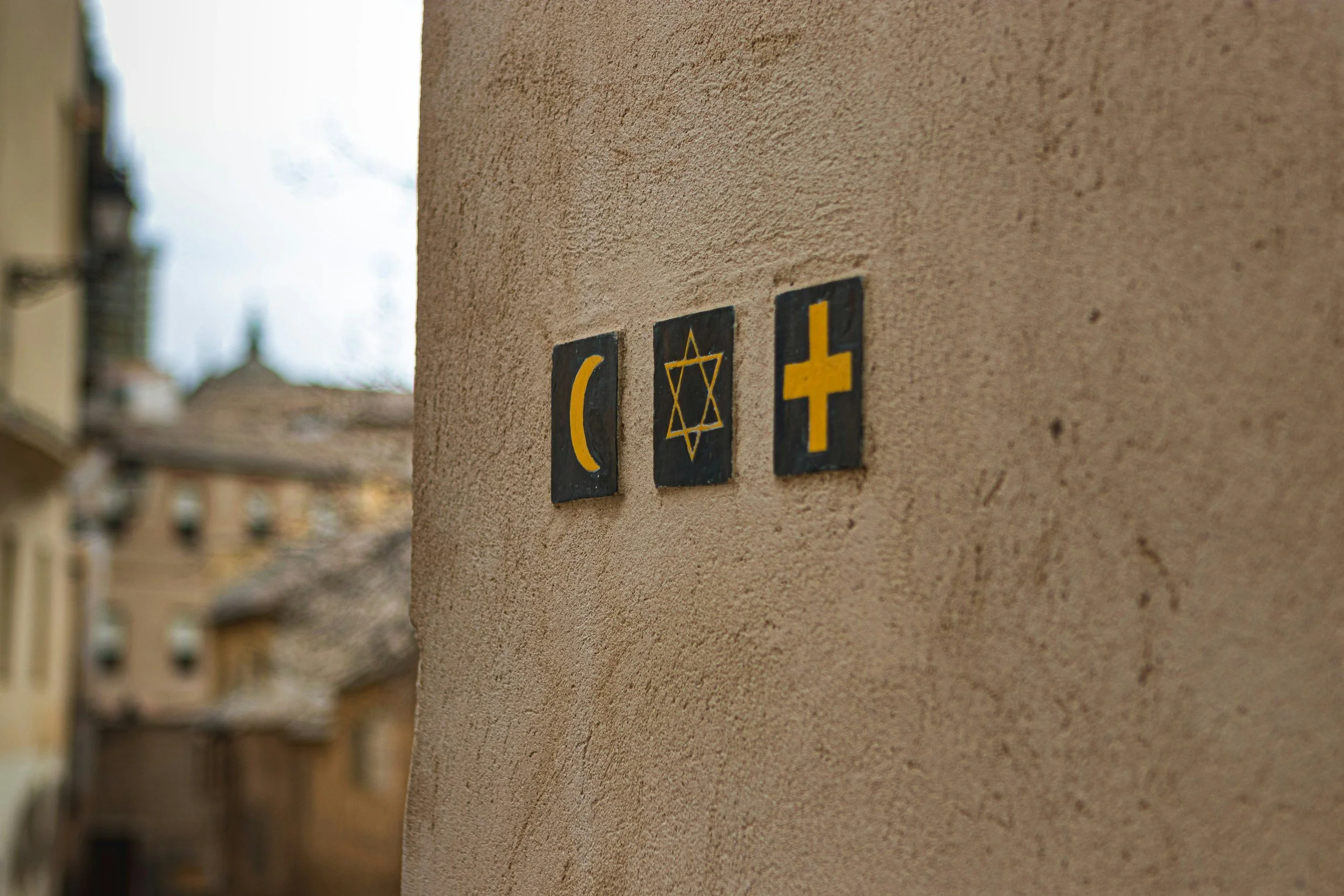
Hallelujah! This morning, I want to start with a statement—perhaps even a cliché—that I have heard passed around a lot in church circles. It goes like this: Christianity is not a religion; it is a relationship.
How many of you here truly believe that to be true? Even though I call it a cliché, how many of you believe that Christianity is fundamentally not a religion, but a relationship? But then, you may ask, what exactly is a religion? What are the components that make up a religion? If we look at it, a religion contains practices, beliefs, rules, laws, traditions, and a distinct community.
Now, let us turn that mirror on ourselves. Do we have beliefs in Christianity? Yes, we do. Do we have practices—certain ways of singing, specific ways of breaking bread, and set patterns of coming together? Yes, we do. Do we have rules and expectations about what to do and what not to do? We absolutely do. Do we have a community? We better have a community, and right now, we are celebrating that very community. So, if it looks like a duck and quacks like a duck, then it must be a duck, right?
We like to look at others and say, "Oh, my religion is not like your religion," which is true in essence, but sometimes we fail to realize that as Christians, we have a dangerous tendency to turn Christianity into a rigid, traditional religion. This morning, we need to ask ourselves a very serious question: Are we risking making our life-giving, dynamic faith into a cold, structured religion? Within each of us, there is a natural craving for ornate celebrations, specific practices we can rely on, and external activities that give us a false sense of comfort and confidence. Through our thoughtless actions, Christianity can subtly become a performance rather than a relationship.
The Danger of the Pharisee Heart
There was a group of people at the time of Jesus who are highly misunderstood in their historical context: the Pharisees. In our modern church culture, if someone you know well looks at you and calls you a Pharisee, it is considered the most hurtful thing a Christian can hear. I have been called a Pharisee multiple times myself. I take it as a serious reminder that I am doing something or displaying an attitude that I shouldn't be displaying.
If you look at the historical origin of the Pharisees, they emerged during the Second Temple period. When the children of Israel came back from captivity in Babylon and rebuilt the temple, a group of people arose who felt that society was completely losing the essence of God's truth. They saw the encroaching Greek and Roman cultural influences and decided to take a strict stand. They wanted to go back to the Word—not just to the written Torah, but to the oral traditions handed down by their fathers, the prophets, the writings, the Psalms, and the entire Old Testament.
The Pharisees began living lives marked by immense dedication, devotion, and passion, fighting hard not to be fashioned like the secular world around them. They were the ones who truly organized and established Judaism as a structured religion. Yet, when the Lord arrived in person, they were completely blinded by their structure. The Pharisees spent their time trying to find fault with the Lord, and Jesus spent His time calling them out. He called them a "brood of vipers" and "hypocrites"—a word that literally means an actor, someone playing a part.
Our Lord explicitly warned us about this kind of religious hypocrisy. In Matthew 23, an entire chapter dedicated to exposing this mindset, Jesus addresses them directly:
"Woe to you, scribes and Pharisees, hypocrites, because you travel around on sea and land to make one proselyte; and when he becomes one, you make him twice as much a son of hell as yourselves."
Think about that. These Pharisees taught the law diligently and they evangelized over land and sea, but Jesus said their hearts were completely far from Him. They praised God with their lips, but their inner lives were entirely detached. We must examine ourselves today: Are we merely praising Him with our lips while our hearts remain turned away?
The warning Jesus gives is incredibly severe. He is saying that it would be far better for a person to remain unconverted than to be won over just to become a rigid, legalistic follower of a religious system. The Lord detests and hates that kind of empty, performative religion.
To help us guard our souls, I want to look at Matthew 12 and highlight three specific ways we subtly turn our relationship with God into a dead religion: external rituals and traditions, an obsession with external appearances, and acting without conviction or certainty in the finished work of Christ.
1. Trading Relationship for External Rituals and Traditions
Let us read Matthew 12:1–8 together:
At that time Jesus went through the grainfields on the Sabbath, and His disciples became hungry and began to pick the heads of grain and eat. But when the Pharisees saw this, they said to Him, "Look, Your disciples are doing what is not lawful to do on the Sabbath." But He said to them, "Have you not read what David did when he became hungry, he and his companions, how he entered the house of God, and they ate the consecrated bread, which was not lawful for him to eat nor for those with him, but for the priests alone? Or have you not read in the Law, that on the Sabbath the priests in the temple break the Sabbath and are innocent? But I say to you that something greater than the temple is here. But if you had known what this means, 'I desire compassion, and not a sacrifice,' you would not have condemned the innocent. For the Son of Man is Lord of the Sabbath."
Picture the scene: It is Saturday, the Sabbath, and Jesus and His disciples are walking through a public cornfield. The disciples are hungry, so they pluck the heads of grain to eat. To a normal observer, there is no issue, but according to the Pharisees and their 613 extended, man-made laws, picking grain was classified as "work". Therefore, they deemed it completely unlawful on the Sabbath.
They had introduced so many legalistic boundaries over the Sabbath. Even today, you can look at certain communities, like historical areas in New York, where literal strings are put up around neighborhoods to mark the Sabbath boundaries. If you walk past that line, your total displacement from the center point is considered too far; you have officially "worked" and broken the Sabbath law.
We might look at that and think we would never condemn someone for eating grain on a Saturday or a Sunday, but the exact same legalistic conditioning plagues our hearts regarding church traditions and rituals. We develop rigid, internal rules about exactly how worship must look, how singing must be conducted, or what exact order our Sunday service must follow.
Let me ask you: Did the Ten Commandments vanish when the Lord Jesus initiated the New Covenant? No, He did not abolish the moral law. If you read the New Testament apostolic teachings, nine of those ten commandments are explicitly repeated and reinforced. The only commandment out of the ten that is never repeated in the New Testament is the command to honor the Sabbath day. Why? Because under Christ, holiness is no longer restricted to a single day of the week—every single day is holy before the Lord.
When you sit down in your home prayer room, that space is just as holy as this church hall. We often call this building a "sanctuary," and that is fine, but your home prayer room is a sanctuary too. When brothers and sisters sit together in a Starbucks, open the Scriptures, and pray, that Starbucks becomes a sanctuary. When you gather in a public park to share fellowship and read the Word, that park is a sanctuary.
Do you realize that you are the literal temple of the living God? When you walk around in your day-to-day life, you are actively carrying the very presence of God. Let us not confine our life-giving relationship with Jesus Christ to a building or turn it into a rigid routine. Jesus explicitly broke those rigid human norms, which is exactly why the religious authorities were so furious with Him. The Pharisees clung desperately to the dead letter of the law, totally oblivious to the fact that the Creator of the universe, the One who flung the stars into existence and spoke heaven and earth into being, was standing right in front of them. He emptied Himself of His glory to destroy this empty religiosity so we could truly meet Him as our Savior.
Are we clinging to church traditions instituted four centuries after Christ as if they are the only acceptable way to do things? In the New Testament, believers met fluidly from house to house, and they met in large temple courts when they gathered as a wider body. They exhorted, encouraged, and built one another up in everyday life.
We must abandon superficial traditions and learn to connect authentically. It reminds me of the old 15-paisa open postcards they used to use in India for cheap communication. A postman was delivering these cards every week to a house on a hill. Because it was an open card, he couldn't help but read it. Every week, the message from one side said, "I am well, I hope you are well," and the response from the other side said, "I am well, I hope you are also well." Eventually, the postman got so tired of walking up the hill to deliver the exact same empty phrases that he threw the card away, saying, "They both already know they are completely fine, why am I walking all this way?"
Sometimes, that is exactly how we interact as brothers and sisters in the church. We ask, "How are you, brother?" "I'm well." "Everything okay?" "Yes, good." We talk about the weather and keep everything completely on the surface. We need to go much deeper than that. We need to build relationships where we are vulnerable enough to say, "Brother, I am deeply hurting right now," or "Sister, please pray for me, I am battling this specific issue." We need to look at each other and ask, "How is your soul? How are you doing spiritually? What has the Lord been speaking to you about lately?" We bring these rigid, superficial traditions into the church because they are comfortable, and we often replace old worldly traditions with meaningless Christian traditions. Let us leave those distractions behind and step beyond them.
2. Obsessing Over External Appearances
The second way we bring a toxic element of religiosity into our midst is by obsessing over outward appearances and external impressions, both in ourselves and in others.
Let us look back at Matthew 23:25–28:
"Woe to you, scribes and Pharisees, hypocrites! For you clean the outside of the cup and of the dish, but inside they are full of robbery and self-indulgence. You blind Pharisee, first clean the inside of the cup and of the dish, so that the outside of it may become clean also. Woe to you, scribes and Pharisees, hypocrites! For you are like whitewashed tombs which on the outside appear beautiful, but inside they are full of dead men’s bones and all uncleanness. So you, too, outwardly appear righteous to men, but inwardly you are full of hypocrisy and lawlessness."
Consider a simple, everyday example. When you clean your house on a normal day versus a day when you know a guest is coming over, you clean it completely differently. When someone is visiting, you scrub frantically, make sure every visible room is completely spotless, and then you take all your clutter, dump it into a back room, and lock the door to prevent anyone from entering.
We do the exact same thing with our spiritual lives. We constantly worry, "What will the brothers think of me? What will the sisters say if I admit that I am struggling with this problem?" We try to project an image of a perfectly spiritual person who reads the Word twenty-four hours a day, never watches television, and possesses absolutely no normal human interests or hobbies—essentially making ourselves look utterly miserable just because we are Christians.
I am certainly not telling you to indulge in ungodly habits or worldly entertainment. What I am saying is: Be real with one another. If you have the liberty to enjoy something with the Lord's blessing in your private time, be honest about it. Do not paint a fake, super-holy caricature of yourself just to protect your reputation and pride. Of course, we must always heed Paul’s warning to ensure our personal liberty never becomes a stumbling block for a weaker brother or sister. But more often than not, we hide our realities not to protect others, but to protect our own self-image.
When an unsaved generation looks at the church from the outside, this superficial facade is exactly what they see. The rampant hypocrisy in the institution of the church is constantly criticized because the real, life-bearing, authentic life of Jesus Christ is not being displayed. I pray that the true Church of God will arise in these times and finally be like a city on a hill, shining brightly so that the genuine nature of Jesus Christ flows out naturally through our real, authentic lives.
3. Living with Uncertainty in the Finished Work of Christ
The final defining mark of religion is a total lack of certainty, leaving people to live in a perpetual state of fear and anxiety regarding their eternal destination.
In almost every major philosophy and world religion—whether it is Islam, Hinduism, Buddhism, or even secular atheism where science is treated as god—the journey follows a similar track. A person reaches a point in life where they realize there must be something more, they adopt a belief system, and they spend the rest of their days hoping that at the final judgment, their good deeds will somehow outweigh their bad deeds. There is always a deep, underlying sense of uncertainty.
Let me tell you, praise God, that is not what Christianity is. If you are practicing a form of Christianity where you are simply performing rituals in the anxious hope that you will somehow make it past judgment day, you are not practicing the true Gospel of salvation by grace through faith.
True salvation means coming to the end of ourselves. We look to that perfect sacrifice of Christ and recognize that absolutely none of our human actions, accomplishments, or pedigree can ever please a holy God. We confess that no inherent goodness dwells within our flesh—neither before our conversion nor after it. We rely entirely on the finished work of Jesus Christ upon the cross of Calvary.
From that moment on, we step out of the kingdom of darkness and into the kingdom of the Son, surrendering our plans, our desires, and our personal ambitions at His feet, crying out, "Lord, govern us, rule over us." We no longer waste our lives calculating, "What is the maximum amount of wrong I can do without losing my salvation?" We throw away that legalistic calculator and allow the Holy Spirit to flow freely through our lives.
The dead letter of the law brings death, but the Holy Spirit gives life. We do not stand before God on the strength of our finances, our education, our talents, or our ministry accomplishments; we stand solely by His grace. We have not been saved by our own works, so that no man can boast. We are saved by grace through faith, explicitly for the good works that God prepared beforehand for us to walk in as we are filled with His Spirit.
Let these beautiful words from Romans 8:12–16 settle deep into your hearts:
“So then, brethren, we are under obligation, not to the flesh, to live according to the flesh—for if you are living according to the flesh, you must die; but if by the Spirit you are putting to death the deeds of the body, you will live. For all who are being led by the Spirit of God, these are sons of God. For you have not received a spirit of slavery leading to fear again, but you have received a spirit of adoption as sons by which we cry out, "Abba! Father!" The Spirit Himself testifies with our spirit that we are children of God. “
Religion falsely teaches people that they can never truly be sure of their salvation. But the Bible tells us that if you have made the Lord your refuge, if you have entered the secret place of the Most High and are trusting implicitly in the finished work of Christ, you can be 100% certain of your eternity.
If you rely on your own actions, you will never, ever be good enough. But when you live a life led by the Holy Spirit day by day, God’s own Spirit actively testifies to your spirit that you are His child. Our Heavenly Father paid the ultimate, highest price to buy us back and bring many sons and daughters to glory, and He will not leave His children behind when He comes. Our salvation is completely secure in Him as long as we trust in Him alone—by grace alone, through faith alone, in Christ alone.
Closing Prayer
Let us bow our heads in prayer this morning.
Father, we thank You this morning because You do not want us to be a dead, religious people; You desire us to be a vibrant, Spirit-filled people. Deliver us from being full of mere head-knowledge and the dry letter of the law, and fill us to overflowing with Your divine life. We refuse to remain trapped in human rituals, traditions, or superficial understandings of what Christianity is supposed to be.
We pray, Lord God, that our lives would be completely captivated by the person of Jesus Christ. Let Christ dwell deeply in our hearts through faith, so that the life we now live in the flesh is lived entirely by faith in the Son of God, who loved us and gave Himself up for us. We leave behind lifeless religiosity today to pursue true, authentic spirituality and Christ-likeness.
Thank You for giving us the right to be called the children of God. May we walk daily in the absolute freedom that Your Holy Spirit provides, living our lives not to create a false impression or to please people, but solely to please Your heart, O Master. Change our daily practices and align our hearts to follow You and You alone. In the mighty name of Jesus we pray, Amen.