I want to thank God, our Pastor, and all of you for this privilege and opportunity to stand before you today and share what the Holy Spirit has placed on my heart.
The other day, I was sitting in my car scrolling through Instagram. I don’t know about you, but I sometimes get caught up in those quick reels. Now, there is a feature called auto-scroll where the videos just keep changing automatically without you even lifting a finger. As I sat there in my car, one particular video caught my attention because it just kept going on and on. It was an advertisement for a prescription drug, and the narrator spent several minutes listing an incredibly long, terrifying list of side effects.
I was so curious that when I got home, I decided to look it up myself. I want to read you what was actually on that warning label. It listed serious risks: possible thyroid tumors and cancer, lumps in the neck, hoarseness, difficulty swallowing, shortness of breath, pancreatitis, severe abdominal pain, kidney failure due to dehydration, gallbladder problems, intestinal blockage, severe constipation, worsening of diabetic eye disease, low blood sugar, and even depression or suicidal thoughts.
When I finished reading that, I had to find out what this drug actually cured. Do you know what it was for? It was simply to fix snoring and help people get a good night's sleep.
I sat back and thought, “Who in their right mind would willingly take something with those kinds of consequences just to fix snoring?” But then it hit me: the only reason a person would ever take a medication like that is out of sheer desperation. They reach a point of misery where they say, "All of the potential side effects and consequences are nothing compared to this one agonizing thing I need fixed right now." Church, that place of desperation—where you are at the end of your rope, where you don’t care what it costs, how long it takes, or what people think—is exactly the environment where God operates. Desperation is the birthplace of a breakthrough. It is the birthplace of radical change. And most importantly, desperation is the catalyst where we give birth to Samuel. The title of my message today is: God Needs a Samuel.
The Divine Equation
When we look closely at the scriptures, from the pages of Genesis all the way to Revelation, we can see that God repeatedly uses a specific, four-step equation whenever He encounters an individual to bring about a divine breakthrough. This equation is consistently mapped out like this:
God has a Need
God looks for a Vessel
God uses a Catalyst
God brings a Resolution
We see this exact pattern play out in the life of Job, in the rise of David, and in the fiery trial of Shadrach, Meshach, and Abednego. Today, I want us to look at how God executed this precise equation in the lives of a broken woman named Hannah and a boy named Samuel.
Step 1: The Need of the Hour
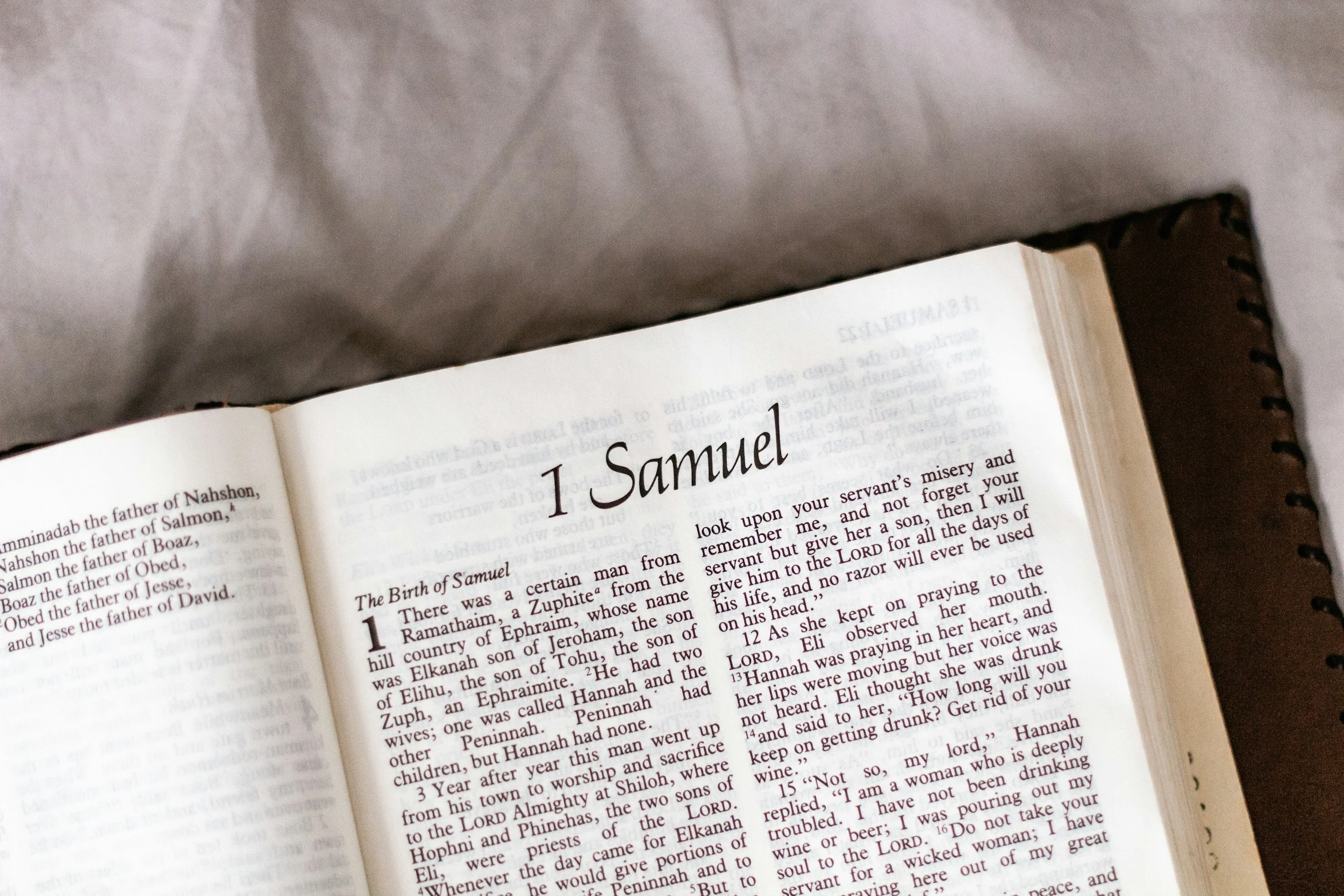
To understand Hannah’s story in 1 Samuel, chapter 1, we first have to examine the dark spiritual backdrop of what was happening in the house of the Lord at Shiloh. Eli was the high priest, and his sons, Hophni and Phinehas, were serving as priests. But the Bible tells us these men were deeply wicked; they did not know the Lord.
Whenever the Israelites brought their sacrifices to offer to God, Eli's sons would show up with a three-pronged fork, plunge it into the cooking pot, and forcefully steal the best portions of the meat for themselves before the fat was even burned as an offering to God. To make matters worse, they were committing sexual immorality right at the doorway of the tent of meeting. They were corrupting the very presence of God at the altar.
Eli knew exactly what his sons were doing, but he failed to restrain or remove them. He honored his sons more than he honored God. Because the priesthood had become entirely contaminated, God made a sovereign, administrative decision: He was going to wipe out Eli’s lineage and start completely fresh.
God had a profound need. He needed a holy replacement—a prophet and a priest who would rise up and serve Him with a devoted heart, moving in alignment with His full intention.
Step 2: The Chosen Vessel
When God has a corporate need, He begins looking for an individual vessel. This is where you and I come into the picture.
Hannah didn't audition for this assignment. She didn't get a detailed backstory or an explanation from heaven. She had absolutely no idea that the priests at the temple were corrupt or that God was planning a reformation. Similarly, you and I may never know the full backstory of why God allows us to go through heavy, crushing seasons. But it is a privilege to be chosen by Him. God doesn’t just choose anyone; He chooses those He knows will be faithful to endure the pressure, fulfill His vision, and birth a "Samuel" at the end of the trial.
The Bible tells us two critical things about Hannah in 1 Samuel 1:5:
"But to Hannah he would give a double portion, for he loved her, but the Lord had closed her womb."
Notice that Hannah was deeply loved by her husband, yet her womb was closed. Her childlessness wasn't a biological accident, a medical anomaly, or a marital issue—the text explicitly says the Lord had closed her womb.
If the Lord is the one who shut the door, then only the Lord can open it. Why would a loving God intentionally shut a door and cause His beloved vessel to suffer? Because He knows that under the right environment, with the right amount of divine pressure, a perfect condition is created within our hearts. It forces us to transform, shifting us from wanting a blessing for our own reputation to being willing to surrender that blessing back to Him.
A "Samuel" in your life might not be a physical child. A "Samuel" represents your breakthrough—your medical healing, deliverance from an addiction, peace in a fractured home, or a radical encounter with God. God borrows our time and applies pressure to birth something magnificent through us that will ultimately serve His purpose.
Step 3: The Catalyst
You can be a wonderful, willing vessel, but without a catalyst, you will always remain an empty vessel. A catalyst is an agent that initiates or accelerates a reaction. The catalyst itself doesn't change, but through the process, you are completely transformed.
Hannah’s catalyst was Peninnah, her husband's other wife. Peninnah had children, but her character was incredibly cruel. Year after year, whenever the family went up to worship at the house of the Lord, Peninnah would mercilessly ridicule, mock, and provoke Hannah about her barrenness. She did it intentionally to make her miserable, until Hannah wept bitterly and could not even eat.
Have you ever wondered why God allowed such a toxic, cruel person into Hannah's immediate circle? Because God is in total control of your catalyst. He knows exactly who and what circumstances are required to stir up a holy desperation inside of you. If Hannah had been comfortable, she would have never made the vow that changed Israel's history.
Often, a catalyst feels like heavy oppression, a difficult boss, a strained relationship, or an unanswered prayer. Think about the Israelites when God hardened Pharaoh's heart. Every time Pharaoh's heart grew harder, the taskmasters became more brutal, and the Israelites’ lives became significantly more uncomfortable. It felt like suffering, but it was actually setting the stage for them to witness the parting of the Red Sea and the glory of God like no generation before them.
The hardest part of dealing with a catalyst is that we don’t know the expiration date. Hannah went through this agonizing, repetitive cycle year after year. We, too, hunker down and pray for a breakthrough, wondering why the misery continues, not knowing when it will end. But remember: only God knows when the spiritual condition inside our hearts is perfectly ready.
Step 4: The Resolution
This brings us to the final part of the divine equation: the resolution. Let us look at how Hannah handles her breaking point when she finally takes her pain to the altar. Look at 1 Samuel 1:9–16:
"Then Hannah rose after eating and drinking in Shiloh. Now Eli the priest was sitting on the seat by the doorpost of the temple of the Lord. She, greatly distressed, prayed to the Lord and wept bitterly. She made a vow and said, 'O Lord of hosts, if You will indeed look on the affliction of Your maidservant and remember me, and not forget Your maidservant, but will give Your maidservant a son, then I will give him to the Lord all the days of his life, and a razor shall never come on his head.' Now it came about, as she multiplied praying before the Lord, that Eli was watching her mouth. As for Hannah, she was speaking in her heart, only her lips were moving, but her voice was not heard. So Eli thought she was drunk. Then Eli said to her, 'How long will you make yourself drunk? Put away your wine from you.' But Hannah answered and said, 'No, my lord, I am a woman oppressed in spirit; I have drunk neither wine nor strong drink, but I have poured out my soul before the Lord. Do not consider your maidservant as a worthless woman, for I have spoken until now out of my great provocation and bitter vexation.'"
Church, there are three profound, liberating truths we can extract from Hannah’s moment of resolution at the altar:
1. Her Anguish was in Secret
Before this moment, Hannah’s husband Elkanah had tried to comfort her by saying, "Hannah, why do you weep? And why do you not eat? And why is your heart sad? Am I not better to you than ten sons?" This shows us that even the person closest to her didn't truly grasp the depth of her agony.
She didn’t retaliate against Peninnah, she didn't post her complaints for the world to see, and even the high priest Eli completely misjudged her character. Her true anguish was kept entirely secret between her and God. Many of you are carrying secret pain right now that your spouse, your children, your coworkers, or your friends know absolutely nothing about. The altar is the only place left where you can safely lay it down.
2. Her Cry was in Silence
Hannah was making a massive, nation-shaping vow to give her future child back to God, yet her voice could not be heard on earth. Her cry was completely silent to human ears, but it was thunderous in the courts of heaven.
If you are feeling voiceless, weary, and completely exhausted today, know this: God hears your silent whispers and your heavy sighs. You do not have to be loud, obnoxious, or put on a performance to move the hand of God. He moves in the quietest, deepest depths of your surrendered soul.
3. Her Trust was Secure
After Hannah explained her grief, Eli answered her in verse 17: "Go in peace; and may the God of Israel grant your petition that you have asked of Him." And look at how she responds in verse 18: "So the woman went her way and ate, and her face was no longer sad."
Think about that. What had actually changed in that exact moment? She hadn't given birth yet. She wasn't even pregnant yet. Eli was just a human priest giving a verbal encouragement, but Hannah recognized the voice of the Lord speaking through him. She knew heaven had responded to her agony, and her trust became instantly secure.
We often wait for a massive sign, an extravagant revival, or a spectacular emotional goosebump to believe our healing has begun. Hannah simply took God at His word, stood securely upon it, changed her countenance, and went home.
Following Through on the Covenant
The story concludes beautifully: they returned to Ramah, Elkanah cohabited with his wife, and the scripture states that "the Lord remembered her." That was her exact prayer—"Lord, remember me." She conceived, gave birth to a son, and named him Samuel, saying, "Because I have asked him of the Lord."
But church, the absolute hardest part of this entire journey is the final act of the resolution: surrendering your Samuel.
It is very easy to bargain with God when we are sitting in the ashes of desperation. We say, "God, if You just give me this corporate job, if You just heal my body, if You just fix this broken marriage, I will dedicate my life to You! I will tithe, I will serve, I will give You the glory!" Then, heaven moves miraculously, we receive the blessing, and suddenly it becomes incredibly difficult to actually let it go. We want to hoard the blessing.
Think about the staggering personal sacrifice Hannah made. Samuel wasn't just her child; he belonged to Elkanah too, yet she made a bold, unilateral covenant to give him away. She looked at the heavy "side effects" of her vow—knowing she would never get to tuck him into bed at night, comfort him when he scraped his knee, or watch him hit his childhood milestones—and she decided that keeping her word to God was worth the cost.
When it came time to fulfill the vow after the child was weaned, look at her husband Elkanah’s godly response: "Do what seems best to you... Only may the Lord establish His word." When you remain fiercely faithful to your covenants with God, He will cause even the potential areas of friction, misunderstanding, and chaos in your family to settle into perfect peace. Hannah took her young boy to Shiloh, walked into the temple, dropped him off with Eli, and remained entirely faithful to her word.
Conclusion and Prayer
My prayer for you today, church, is that when God shows up and answers your desperate cries, you will have the spiritual courage, integrity, and boldness to follow through on your promises to Him—even if the personal cost turns out to be higher than you ever anticipated.
Let us bow our heads and pray.
Dear Heavenly Father, we thank You for this divine moment. Lord, we may not always understand the backstory or the reasons why You allow us to experience heavy trials, long seasons of waiting, and crushing pressures. But God, we thank You that You see us. Just like Hannah, You see our anguish when it is hidden in secret, and You hear our prayers when we are completely silent and out of words. May our hearts be found so faithful that our trust in Your promises remains unshakable.
I pray for everyone listening today—whatever their unique journey, whatever their private trial, or whatever storm they are navigating—that they would rest in the assurance that You are in absolute, total control. Walk with them, comfort them, lead them into their places of supernatural victory, and let Your Word be an enduring anchor to their souls. In the mighty, matchless name of Jesus we pray, Amen.
Remember this as you leave today, church: God always uses ordinary human vessels for His extraordinary divine acts. Even when He seems totally silent, His presence is right there with you in the middle of the trouble. Call upon Him, trust the process, and watch Him bring forth your breakthrough!